
Why the real cost of flooding matters
Flooding is one of the biggest threats to homeowners in Florida. Rising water levels, storm surges, and heavy rains can cause thousands of dollars in damage within hours.
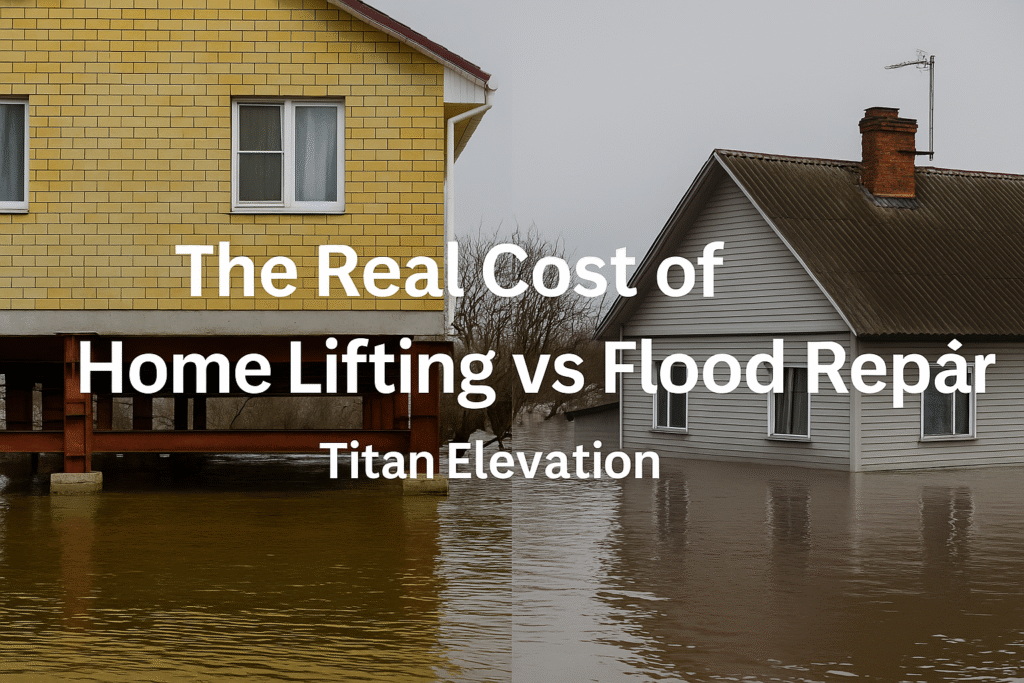
Many homeowners face the same question after every major storm: should they keep repairing flood damage or invest in lifting their home above future water levels? Understanding the real cost difference helps you make a decision that protects both your property and your finances long term.
The issue with repeat flood damage
Repairing flood damage might seem cheaper at first, but the costs add up quickly. Each storm season brings new cleanup bills, drywall replacement, flooring repairs, and sometimes electrical or HVAC work. Water exposure weakens materials over time, even when everything looks fixed on the surface.
Mold remediation and rising insurance deductibles make each repair cycle more expensive than the last. Eventually, some homes are labeled “repetitive loss” properties by insurers or FEMA, driving premiums even higher.
How this shows up in Florida homes
Coastal and low-lying homes across Florida experience similar patterns. You might see minor flooding during king tides or heavy rain, followed by standing water under crawlspaces or slabs. Moisture leaves musty smells, buckled floors, and stains on baseboards.
Over a few years, rot begins to form in framing and floor joists. Foundation movement may also appear, with hairline cracks in drywall or uneven doors and windows. These are early warning signs that your home’s elevation is too low for current flood conditions.
When flood repairs stop making sense
The problem with repeated flooding is that it never truly ends. As FEMA updates flood maps and base flood elevations rise, a home that used to be safe may no longer meet minimum height requirements. Once you experience more than one flood event, repair costs often exceed the long-term price of elevating the house.
Elevation not only prevents future damage but can also lower flood insurance premiums by thousands of dollars each year. Over time, the savings offset the initial investment and increase the resale value of the property.
What to do now
If you have already repaired flood damage more than once, it’s time to consider lifting your home. Start by reviewing your flood zone designation and checking the base flood elevation for your area.
Compare that to the height of your existing structure. Take photos of recurring issues like damp crawlspaces, foundation cracks, or water lines after storms. These details help professionals estimate your elevation needs and determine if a grant or insurance credit may apply.
Understanding the financial picture
Many homeowners underestimate the financial strain of repeat flooding. The cost of replacing drywall, flooring, cabinets, and base trim after just one event can easily reach $30,000 or more.
When structural drying, mold removal, and mechanical repairs are added, the total can double. By contrast, the average home elevation in Florida—depending on size and foundation type—can cost between $80,000 and $150,000. While that sounds high, it’s a one-time investment that can eliminate repetitive damage and drastically reduce insurance costs.
If you’re exploring financial help, check out our guide to home elevation grants:
Early steps before calling for elevation service
Gather your past repair invoices, insurance claim summaries, and photos from previous flood events. This record helps determine if your property qualifies for FEMA or state mitigation programs. You can also ask your insurance agent for an updated elevation certificate, which outlines your home’s current height compared to flood risk levels.
Once you have this information, reach out to Titan Elevation Experts for a site evaluation. Their team will review your property’s structure, foundation type, and flood history to create a clear plan and estimate before any work begins.
Our process
Home elevation is a detailed but straightforward project when handled by experienced professionals. Titan Elevation Experts begins every lift with a complete site and foundation assessment.
The team measures your home’s current elevation, inspects the soil, and checks for existing foundation or structural issues. Once the evaluation is complete, you’ll receive a clear plan outlining scope, cost, and a timeline you can rely on.
Site preparation and foundation work
Before the lift, Titan Elevation secures all utilities and prepares the area around your home. Temporary supports and hydraulic jacks are placed strategically under the structure.
Once stabilized, the lift begins slowly and evenly to prevent damage. After reaching the target height, new foundation walls, pilings, or concrete block piers are installed to meet FEMA flood zone requirements. This process strengthens the structure while improving its long-term flood resistance.
Utility reconnection and finishing
Once the foundation is complete, Titan’s team reconnects all utilities—water, power, gas, and sewer—ensuring everything meets Florida building codes.
Access stairs, decks, and new entryways are built or adjusted to fit the raised structure. Finally, the site is cleaned and graded to direct water away from the home. You’ll receive a new elevation certificate, final inspection, and all documentation for insurance or FEMA compliance.
FAQs
How long does the home lifting process take
Most home elevation projects in Florida take two to four months from permits to completion, depending on foundation type, soil, and size.
Can I stay in my home during the lift
No. It’s safest to vacate the property during active lifting and foundation work. Titan Elevation helps clients plan temporary accommodations.
Will insurance premiums drop after elevation
Yes. Raising your home above the base flood elevation often reduces flood insurance costs by 30–70 percent depending on your new height and flood zone.
Does lifting affect the home’s structure
When performed by professionals, lifting does not harm your home. The process is gradual and supported by engineered systems to maintain alignment.
Are there grants or programs to help pay for elevation
Homeowners may qualify for FEMA Hazard Mitigation or Flood Mitigation Assistance programs. Titan Elevation can guide you through the paperwork.
Areas we serve
Titan Elevation Experts proudly serves homeowners across Tampa Bay, St. Petersburg, Clearwater, Sarasota, and coastal communities throughout Central and Southwest Florida. We also work with inland homeowners dealing with high groundwater and drainage issues.
Closing action
If you’re tired of costly flood repairs and want a permanent solution, contact Titan Elevation Experts today. Schedule a free consultation to compare the cost of lifting your home versus future flood damage. Protect your home, lower your premiums, and gain peace of mind before the next storm season.